Table Of Content

Let’s dive deeper into the definition, location, and importance of the intake manifold. On the other hand, the straight manifold was in line with the direction of the flow supplied from the inlet of the intake manifold and the direction of the intake port. It resulted in a faster flow velocity towards the inner intake port than towards the outer intake port (Fig. 12)42. The straight manifold has a symmetrical shape compared to the curved manifold.
Components of the Intake Manifold
In current transportation market, the role of internal combustion engines is still important1 because the electric vehicles have problems to overcome, such as battery problem and power generation2,3. There is great scope for even further improvements in engines with advances in combustion technologies to meet the stringent environmental regulations4,5. Among internal combustion engines, gasoline direct injection (GDI) engines have the advantages of fuel economy, transient response, and precise air–fuel ratio control6,7. Thus, many studies have been focused on improving engine efficiency8 and reducing the exhaust emissions of GDI engines9,10. For instance, a properly tuned intake manifold can increase the air density, leading to better combustion and more power.
Project Evil Benefits From New Intake Manifold Technology From CFE - Dragzine
Project Evil Benefits From New Intake Manifold Technology From CFE.
Posted: Thu, 07 Feb 2019 08:00:00 GMT [source]
What is an engine intake manifold?
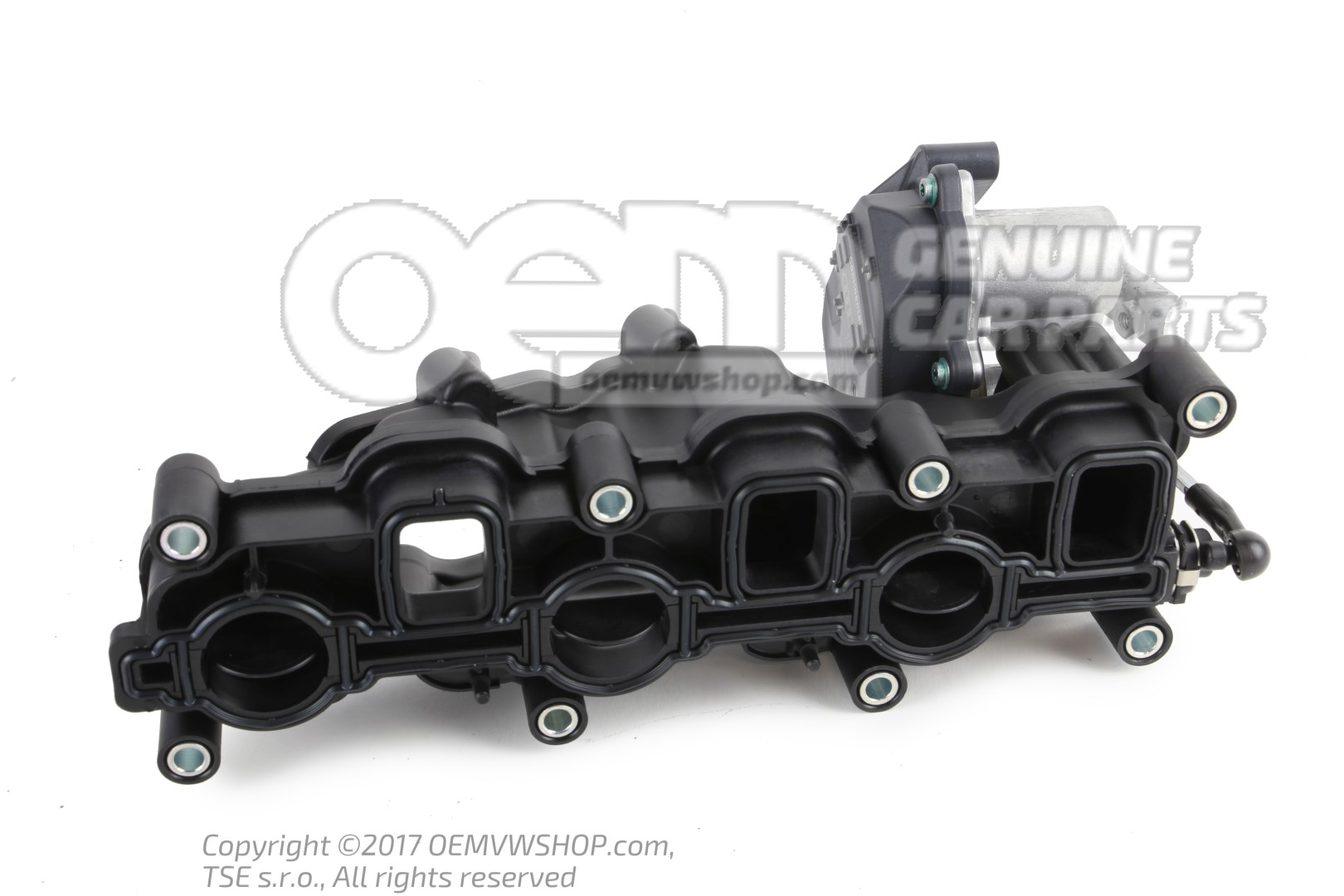
The intake manifold is responsible for distributing the air and fuel mixture to each cylinder of the engine. It connects the throttle body to the engine cylinders and ensures a smooth flow of the air-fuel mixture. The design and geometry of the intake manifold greatly influence its performance.
Reliability of PIV experiment results
The intake manifold connects the throttle body to the engine’s intake ports, allowing the air to enter the combustion chambers. The intake manifold is a crucial component of a car‘s engine, responsible for delivering air to the engine cylinders. It plays a vital role in optimizing the air flow and improving engine performance. In this section, we will explore the definition of an intake manifold and understand its importance in a car.
Tunnel Ram Intakes
And the length scale of the arrow proportional to the velocity magnitude was the same between the experiment and simulation. 9 with respect to the tumble ratio, turbulent kinetic energy, and maximum velocity in PIV plane. Those results selected for validation because they could be represented the in-cylinder flow characteristics. There was a difference between the experimental and simulation results for the tumble ratio in bTDC 270°, at which the flow had a strong turbulence due to fast intake flow (Fig. 9a). The tumble ratio differentiation in bTDC 270° was caused by the strong disturbance and the narrow ROI of experiment as can be seen in Fig. However, the simulation results showed high accuracy in the subsequent results.
Can A Cold Air Intake Really Help Your Truck’s Performance
The curved manifold consisted of one flow path supplied to each intake port, and the flow direction at the manifold inlet and the port direction were vertical. The straight manifold had a shape in which the flow direction at the manifold inlet and the port direction were in-line, and the flow path split when it was supplied to each intake port. This minimizes interference of one cylinder's pressure waves with those of another, giving better torque from smooth mid-range flow. Such manifolds may have been originally designed for either two- or four-barrel carburetors, but now are used with both throttle-body and multi-point fuel injection.
Effect of intake manifold geometry on cylinder-to-cylinder variation and tumble enhancement in gasoline direct injection ... - Nature.com
Effect of intake manifold geometry on cylinder-to-cylinder variation and tumble enhancement in gasoline direct injection ....
Posted: Fri, 18 Nov 2022 08:00:00 GMT [source]
Ford Performance Unveils Tunable Gen-4 Coyote Crate Engine
These aftermarket intake manifolds are often engineered to provide better air distribution and higher RPM airflow. Depending on the application, the installation of an aftermarket intake manifold can range from very easy to somewhat difficult. To ensure that the installation time is minimized and the performance increase is maximized, there are a few pre-installation steps that should be taken. It’s likely that you’ll find out that a special tool or special part is needed for the installation. If the aftermarket intake manifold doesn’t come with installation instructions, find out from the manufacturer what additional parts will be needed. During this inspection, see if there are any casting residues or defects present; inspect all threaded holes to check for breakthroughs or strip-outs.
Common Symptoms of Intake Manifold Problems
Better atomization allows for a more complete burn of all the fuel and helps reduce engine knock by enlarging the flame front. To achieve this turbulence it is a common practice to leave the surfaces of the intake and intake ports in the cylinder head rough and unpolished. Remember, timely repair or replacement of a faulty intake manifold and its gasket is crucial to maintain the optimal performance and efficiency of your vehicle’s engine intake system. The intake manifold gasket is a seal that sits between the intake manifold and the engine block. Its primary function is to ensure a tight and leak-free connection between these two components.
Added to this is the natural resonant frequency between the plenum and the tube. Although these manifolds look very similar, the results they turned in varied considerably. Understanding what constitutes a good intake helps greatly to save money on an intake that delivers very little, if any, of what you are looking for. If you have the time and equipment, it’s better to cut open and modify the stock intake. The stock BMW TB is 2.5” in diameter, with a good chunk of the area being taken up by the butterfly, leaving not a whole lot of room for air to flow through. The TB itself is small, so even modified the largest aftermarket option I had seen was about 2.7”.
First, two discrete intake runners with different length are employed, and a butterfly valve can close the short path. Second the intake runners can be bent around a common plenum, and a sliding valve separates them from the plenum with a variable length. Straight high-speed runners can receive plugs, which contain small long runner extensions. The plenum of a 6- or 8-cylinder engine can be parted into halves, with the even firing cylinders in one half and the odd firing cylinders in the other part. Both sub-plenums and the air intake are connected to an Y (sort of main plenum).
Vic Sr. ‘s entry into the world of “hot rods” led to the design and manufacture of the first Edelbrock intake manifold, and thus the hotrod age began. Staggered jetting in the carb can usually fix minor fuel distribution problems. A streamlining exercise netted more horsepower, with no downside than the manifolds shown nearby. Although it works well with four cylinders attached to the plenum, the best is to have three cylinders so attached. Like all non-ITB BMW owners, I suffered from major TB envy so I wanted to go big.
They are commonly used in high-performance applications where heat management is crucial. One important consideration in supercharger intake manifold design is the manifold pressure. The intake manifold must be designed to handle the increased pressure generated by the supercharger. Reinforced materials and robust construction techniques are often employed to withstand the higher pressures.
To illustrate the benefits of a dry intake manifold, let’s consider an example. Imagine a high-performance engine with a wet intake manifold that experiences a pressure drop of 2 psi. By switching to a dry intake manifold design, the pressure drop can be reduced to 1 psi. This improvement in pressure drop translates to increased airflow and engine power.
The shape of the intake manifold runner can affect the velocity and distribution of the air-fuel mixture entering the cylinders. A well-designed runner can improve the engine's power, torque, and fuel efficiency. An intake manifold runner design refers to the shape and configuration of the passages in an engine's intake manifold that deliver air and fuel to the cylinders. For example, let’s consider a scenario where a car has a stock intake manifold that restricts the airflow. By replacing it with a high-performance intake manifold that allows for better airflow, the engine can experience a noticeable increase in horsepower.
At higher speeds, shorter runners can enhance the volumetric efficiency, increasing power output. Designing an intake manifold requires considering the engine’s specific requirements, such as desired power band, RPM range, and airflow characteristics. It involves optimizing the manifold’s shape, dimensions, runner length, and port design to achieve the desired performance goals. The intake manifold is an essential component of an internal combustion engine. It plays a crucial role in the process of delivering air and fuel to the engine cylinders.


No comments:
Post a Comment